
We give the best Paper Container and Lid
Paper Containers and Lids: A Comprehensive Overview
Introduction
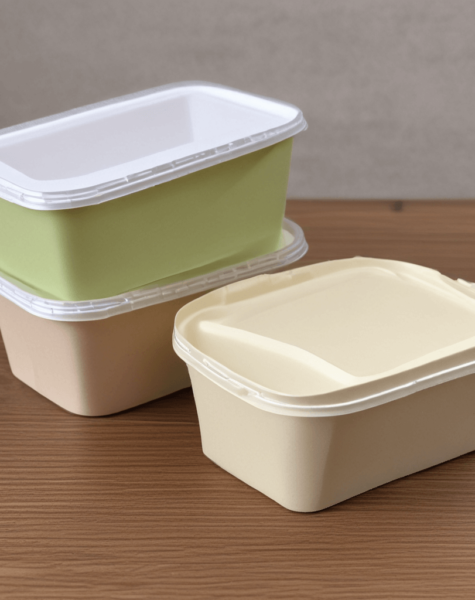
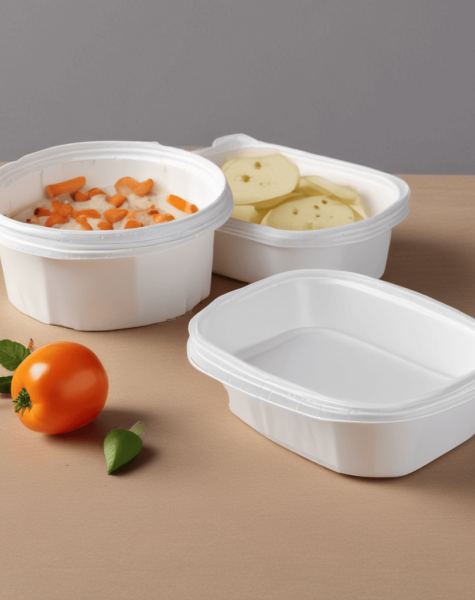
Paper containers and lids have emerged as sustainable alternatives to traditional packaging materials like plastic and styrofoam. Composed primarily of cellulose fibers, these containers offer a biodegradable and eco-friendly solution for various applications. This article delves into the technical aspects of paper containers and lids, exploring their manufacturing processes, materials, design considerations, environmental impact, and potential applications.
Materials and Composition
Paper containers and lids are predominantly crafted from paperboard, a rigid sheet material produced by combining multiple layers of paper. The composition of paperboard can vary depending on the desired properties, such as strength, water resistance, and printability. Common additives include:
- Polyethylene (PE) coating: Enhances water resistance and barrier properties.
- Polyethylene terephthalate (PET) coating: Provides additional strength and durability.
- Bio-based coatings: Derived from renewable resources, offering eco-friendly alternatives.
- Paper pulp: Recycled paper fibers can be incorporated to reduce environmental impact.
Manufacturing Process
The production of paper containers and lids involves several key steps:
- Paperboard production: Paper pulp is formed into sheets through a papermaking process. Multiple layers of paperboard are then combined to create the desired thickness and strength.
- Die-cutting: Paperboard sheets are cut into specific shapes using precision die-cutting machines to form the container and lid components.
- Forming: The cut-out components are transformed into three-dimensional shapes through bending, folding, and gluing processes.
- Coating and lamination: Optional coatings or laminations are applied to enhance the container’s performance and appearance.
- Printing: Graphics, logos, and product information are printed on the container and lid surfaces using various printing techniques.
- Quality control: Rigorous inspections are conducted to ensure product quality, dimensional accuracy, and compliance with food safety standards.
Design Considerations
The design of paper containers and lids is crucial for optimizing performance, functionality, and sustainability. Key factors to consider include:
- Shape and size: The container’s shape and size should be tailored to the product it will hold, ensuring optimal fit and product protection.
- Structural integrity: The container must possess sufficient strength to withstand handling, transportation, and product weight.
- Barrier properties: Depending on the product, the container may require specific barrier properties to prevent moisture, oxygen, or grease penetration.
- Printing and graphics: The design should incorporate visually appealing graphics and clear product information.
- Sustainability: Material selection, manufacturing processes, and end-of-life considerations should prioritize environmental sustainability.
Environmental Impact
Paper containers and lids offer several environmental benefits:
- Biodegradability: Paper-based materials decompose naturally in the environment, reducing landfill waste.
- Recyclability: Paper containers can be recycled into new paper products, conserving resources.
- Reduced carbon footprint: Paper production generally has a lower carbon footprint compared to plastic or styrofoam manufacturing.
- Renewable resource: Paper is derived from wood, a renewable resource when managed sustainably.
Applications
Paper containers and lids have a wide range of applications across various industries, including:
- Food and beverage: Food packaging for hot and cold beverages, ready-made meals, and snacks.
- Consumer goods: Packaging for cosmetics, personal care products, and household items.
- Industrial: Containers for small parts, components, and other industrial products.
Challenges and Future Trends
While paper containers and lids offer numerous advantages, there are challenges to address:
- Water resistance: Improving water resistance for certain products remains a focus area.
- Cost competitiveness: Achieving cost parity with plastic alternatives is essential for wider adoption.
- Consumer perception: Educating consumers about the benefits of paper packaging is crucial.
Future trends in paper container technology include:
- Advanced barrier coatings: Development of more effective and sustainable barrier coatings.
- Lightweighting: Reducing material usage without compromising performance.
- Functionalization: Incorporating additional functionalities, such as antimicrobial properties or heat resistance.
Paper containers and lids have emerged as a promising alternative to traditional packaging materials, offering a combination of sustainability, versatility, and performance. By addressing challenges and embracing technological advancements, the paper packaging industry can continue to grow and contribute to a more circular economy.
Paper containers and lids have emerged as sustainable alternatives to traditional packaging materials like plastic and styrofoam. Composed primarily of cellulose fibers, these containers offer a biodegradable and eco-friendly solution for various applications. This article delves into the technical aspects of paper containers and lids, exploring their manufacturing processes, materials, design considerations, environmental impact, and potential applications.
Product Overview
The product list you provided offers a wide range of paper containers and lids with varying capacities and materials:
- Paper Containers + Lids (280 GSM): Available in 50ml, 100ml, 150ml, and 200ml capacities.
- Paper Containers + Lids (320 GSM): Available in 250ml, 350ml, 500ml, 750ml, 1000ml, and 1250ml capacities.
- White Food Trays (320 GSM): Available in 250ml, 500ml, 750ml, 1000ml, and 1250ml capacities.
- Kraft Food Trays (320 GSM): Available in 250ml, 500ml, 750ml, 1000ml, and 1250ml capacities.
- White Food Boxes (320 GSM): Available in 250ml, 500ml, 750ml, 1000ml, and 1250ml capacities.
- Kraft Food Boxes (320 GSM): Available in 250ml, 500ml, 750ml, 1000ml, and 1250ml capacities.
Sustainability: Material selection, manufacturing processes, and end-of-life considerations should prioritize environmental sustainability.
Paper containers and lids offer several environmental benefits:
- Biodegradability: Paper-based materials decompose naturally in the environment, reducing landfill waste.
- Recyclability: Paper containers can be recycled into new paper products, conserving resources.
- Reduced carbon footprint: Paper production generally has a lower carbon footprint compared to plastic or styrofoam manufacturing.
- Renewable resource: Paper is derived from wood, a renewable resource when managed sustainably.
Applications
Paper containers and lids have a wide range of applications across various industries, including:
- Food and beverage: Food packaging for hot and cold beverages, ready-made meals, and snacks.
- Consumer goods: Packaging for cosmetics, personal care products, and household items.
- Industrial: Containers for small parts, components, and other industrial products.
Challenges and Future Trends
While paper containers and lids offer numerous advantages, there are challenges to address:
- Water resistance: Improving water resistance for certain products remains a focus area.
- Cost competitiveness: Achieving cost parity with plastic alternatives is essential for wider adoption.
- Consumer perception: Educating consumers about the benefits of paper packaging is crucial.
Future trends in paper container technology include:
- Advanced barrier coatings: Development of more effective and sustainable barrier coatings.
- Lightweighting: Reducing material usage without compromising performance.
- Functionalization: Incorporating additional functionalities, such as antimicrobial prosiperties or heat resistance.
Paper containers and lids have emerged as a promising alternative to traditional packaging materials, offering a combination of sustainability, versatility, and performance. By addressing challenges and embracing technological advancements, the paper packaging industry can continue to grow and contribute to a more circular economy.
- Customization: Explore options for customizing paper containers and lids with various shapes, sizes, and designs to meet specific customer needs.
- Printing Technology: Discuss the different printing techniques used on paper containers and lids, such as offset, flexography, and digital printing.
- Food Safety: Emphasize the importance of food safety standards and certifications for paper containers and lids.
- Cost-Benefit Analysis: Compare the costs and benefits of paper containers and lids with other packaging materials.
- Market Analysis: Provide insights into the growing demand for sustainable packaging solutions and the market potential for paper containers and lids.
By incorporating these additional elements, you can create an even more comprehensive and informative article on paper containers and lids.
FAQ: Paper Containers and Lids
What are paper containers and lids made of?
Paper containers and lids are primarily made from paperboard, a rigid material composed of multiple layers of paper. They may also contain additional coatings like polyethylene (PE) or polyethylene terephthalate (PET) for enhanced water resistance and durability.
Are paper containers and lids environmentally friendly?
Yes, paper containers and lids are considered environmentally friendly as they are biodegradable and recyclable. They also have a lower carbon footprint compared to plastic or styrofoam alternatives.
Are paper containers and lids food safe?
Yes, paper containers and lids can be food safe when manufactured and coated with food-grade materials. Look for certifications like FDA approval to ensure safety.
Can paper containers and lids be customized?
Yes, paper containers and lids can be customized in terms of size, shape, design, and printing to meet specific requirements.
What is the difference between PE and PET coatings on paper containers?
PE (polyethylene) coatings provide water resistance, while PET (polyethylene terephthalate) coatings offer additional strength and durability.
How are paper containers and lids made?
The process involves paperboard production, die-cutting, forming, coating, printing, and quality control.
Can recycled paper be used in paper containers?
Yes, recycled paper can be incorporated into paperboard for producing paper containers and lids.
Are paper containers and lids leakproof?
The leakproofness depends on the container’s design, the type of coating, and the contents. Some containers might require additional sealing for liquids.
Can paper containers be used for hot food?
Some paper containers are designed to withstand hot food, but it’s essential to check the product specifications.
What is the shelf life of paper containers and lids?
The shelf life depends on storage conditions and the type of coating. Generally, paper containers have a good shelf life when stored in a cool, dry place.
How can I dispose of paper containers and lids?
Paper containers and lids can be recycled if your local recycling facility accepts them. They can also be composted in commercial composting facilities.
Are there biodegradable options for paper containers?
Yes, many paper containers are biodegradable, but the composting process might vary. Check the product specifications for details.
Where can I buy paper containers and lids?
Paper containers and lids are available from packaging suppliers, online retailers, and some grocery stores.
How do I choose the right size paper container?
Consider the volume of the product you want to pack and the desired presentation.
By addressing these frequently asked questions, you can provide valuable information to potel customers and help them make informed decisions about using paper containers and lids.
Contact
- India
-
+97470187813
- support@.com